
Hampton County Arrest Warrants Explained
An arrest warrant is a judge's order allowing an arrest once the law's required showing has been made. In Hampton County, Magistrates issue arrest and search warrants, set bail, and hold preliminary hearings. Felony-level files move up to the Circuit Court's General Sessions division and the Solicitor, and the Clerk of Court accepts and maintains General Sessions criminal warrants. The paperwork usually starts with a law-enforcement request and sworn facts, then goes to a judge for review and signature. South Carolina law also limits when a private person, rather than an officer, may seek an arrest warrant, and it allows a courtesy summons in some qualifying cases instead. Bond amounts turn on the charge and the judge. No Hampton-wide bond schedule is published.
Hampton County Magistrates Issue Arrest Warrants
Hampton County Magistrate Court is the natural first call for anything within its criminal and traffic jurisdiction. The county Magistrate page lists two locations, Varnville and Estill, and names arrest and search warrants among the court's duties. It offers no public search of issued orders and no separate warrant clerk. For a summary-level matter, give staff the town, the law-enforcement agency, and any complaint or case number so they can route you to the right office. A city citation may belong to a Municipal Court instead. A General Sessions file goes to the County Clerk. Don't assume the town where someone lives tells you which court issued the warrant.
Inside a Hampton County Arrest Warrant
Hampton County has not published a sample public arrest-warrant entry. A case view or warrant file, though, may identify the issuing authority, alleged offense, related case, issue date, service return, and bond terms. Those are possible record fields, not a promise that the full warrant or affidavit appears online. The General Sessions format example shows case notation only.
| Case notation | A General Sessions example follows year and GS markers, such as YYYYGS25NNNNNN; it is a format illustration, not a person's case. |
|---|---|
| Charge / offense | Identifies the alleged offense or statute when the record is public. |
| Issuing authority | Names a magistrate or other judge who reviewed the request. |
| Request basis | May point to a sworn complaint or affidavit; active investigative material may be restricted. |
| Bond / conditions | Ask the court or detention center for current terms; no general Hampton schedule was found. |
| Issue and return | Issue date, service, arrest, and later court action can be distinct events. |
The Hampton County Clerk's Criminal Warrant File
The General Sessions page says the Hampton County Clerk of Court accepts and maintains all criminal warrants for that division, sends warrant information on for indictment preparation, collects bail money and fees, and updates the file after court action. That duty is narrow. It does not make the Clerk the record holder for every city or Magistrate warrant in Hampton County. The Public Index can help you find a General Sessions case and its docket events, but a sealed warrant or affidavit may not show up there. Ask the Clerk which portion is public, and whether a docket entry reflects service, a bond violation, or a motion to rescind. The General Sessions page lays out the office's local responsibility.
Serving Arrest Warrants in Hampton County
The Sheriff's Office is the countywide service and custody channel, but it names no warrant unit or direct warrant line. Municipal police contacts exist for Hampton, Estill, Varnville, and Yemassee. Brunson's town page says its police service is contracted to Hampton County. State law also lets a municipal warrant be endorsed for execution by a sheriff or a magistrate's constable outside that town's limits. After service, booking and bond questions belong with the detention or court office in charge. A blank result in the Public Index proves nothing either way, since a case may be sealed, investigative, or sitting in a lower court. Ask which agency holds the service assignment rather than assuming one county desk serves every order.
Who Serves Hampton County Arrest Warrants?
Who serves a warrant depends on the order and the issuing jurisdiction. The sheriff handles countywide work. City police handle municipal matters. A magistrate's constable or another authorized agency may also have a role. Rule 30 spells out service duties for bench warrants, and S.C. Code section 22-5-110 covers endorsement of municipal warrants beyond town limits. Those rules explain the handoff; they are not a current Hampton County service roster. When a court points you to custody or bond, the Sheriff's Office lists the detention center as a 24-hour contact. Confirm the current number and any amount before you travel. The clerk remains the source for the order itself; detention staff handle custody and bond details.
Hampton County Arrest, Summons, and Bench Warrants Compared
A summons tells a person to appear. An arrest warrant authorizes an arrest. A bench warrant brings someone before a court after a missed obligation or a bond violation. South Carolina's courtesy-summons rules can apply when a private citizen brings a complaint rather than an officer. The issuing court can say which document exists in a Hampton County matter and what response it requires.
| Feature | Arrest Warrant | Summons | Bench Warrant |
|---|---|---|---|
| What it orders | Arrest under a judicial order | Appear in court on a stated date | Bring a person back before the court |
| Typical basis | Required legal showing for an alleged offense | Qualifying charge or complaint process | Missed appearance or bond condition |
| Who issues | Magistrate or authorized judge | Court process under applicable law | Judge in the existing case |
| Where to ask | Issuing court and named agency | Court shown on the summons | Court that set the missed date |
A Hampton County Search Warrant Is Not an Arrest Warrant
South Carolina treats search warrants as their own animal. A search warrant lets officers look at a named place, person, or property for evidence tied to an investigation. It is not an arrest warrant, and it offers no public self-check for one. The judicial official who issued it keeps the record and the return information. Active investigative material can stay restricted when releasing it might interfere with a proceeding. So a missing online docket proves nothing about whether an order exists. If a Hampton County search touched your home or land, ask the issuing court or agency what can be released. Hampton County residents who keep that distinction straight will not confuse a search authorization with the arrest process covered above.
Hampton County Federal Arrest Warrants Follow Another Court
A federal case in Hampton County never lands in the Hampton County Clerk's files. The U.S. District Court for South Carolina puts Hampton in the Beaufort Division, and federal warrants can involve a magistrate judge, U.S. Marshals, agents, or task-force partners. PACER shows some public dockets. Sealed warrant papers may not appear there. The federal court's published pricing page explains its docket-access fees, and it is a reference on cost, not a warrant record. For a possible federal matter in Hampton County, contact the issuing federal court or an attorney. The Hampton Public Index and SLED CATCH cannot certify federal warrant status, so Hampton County searchers should not lean on either tool here.
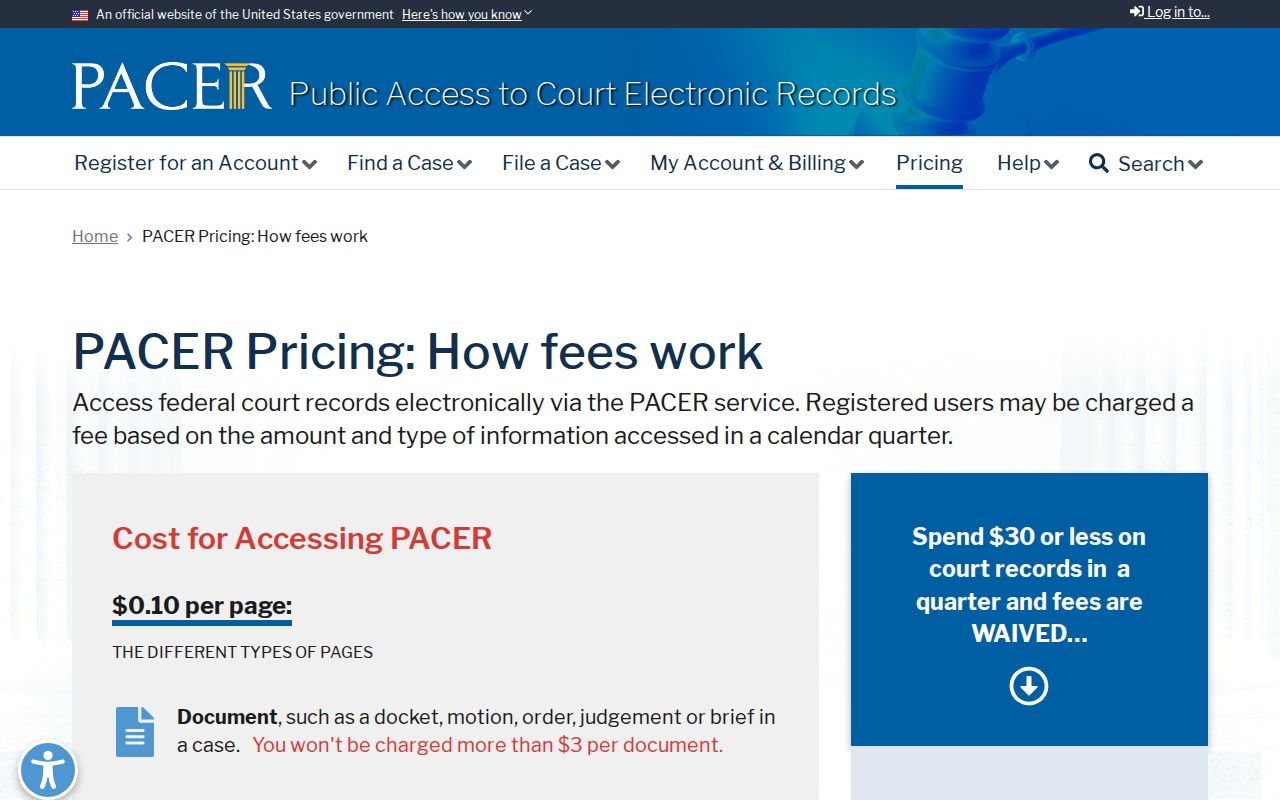
A PACER result is not a complete federal warrant search.
Steps for a Hampton County Arrest Warrant
Work from the warrant itself. Confirm the issuer, the case number, and the court date. Ask whether counsel can arrange an appearance, whether bond is set, and whether a motion to recall or quash is on the table. Find out which building handles the next step. Hampton County publishes no countywide safe-surrender hour and no standard bond amount. Contact the Sheriff's Office or detention center about service, custody, or current bond instructions only when the court sends you that way. For a General Sessions matter, the Clerk holds the criminal-warrant file. For a Magistrate or municipal case, call that court directly. A lawyer can sort an arrest warrant from a bench warrant, summons, or sealed record, and can ask whether Hampton County allows a pre-arrest appearance.
Important: Confirm the issuing court and ask an attorney about the available route before appearing; no countywide walk-in procedure is published.